
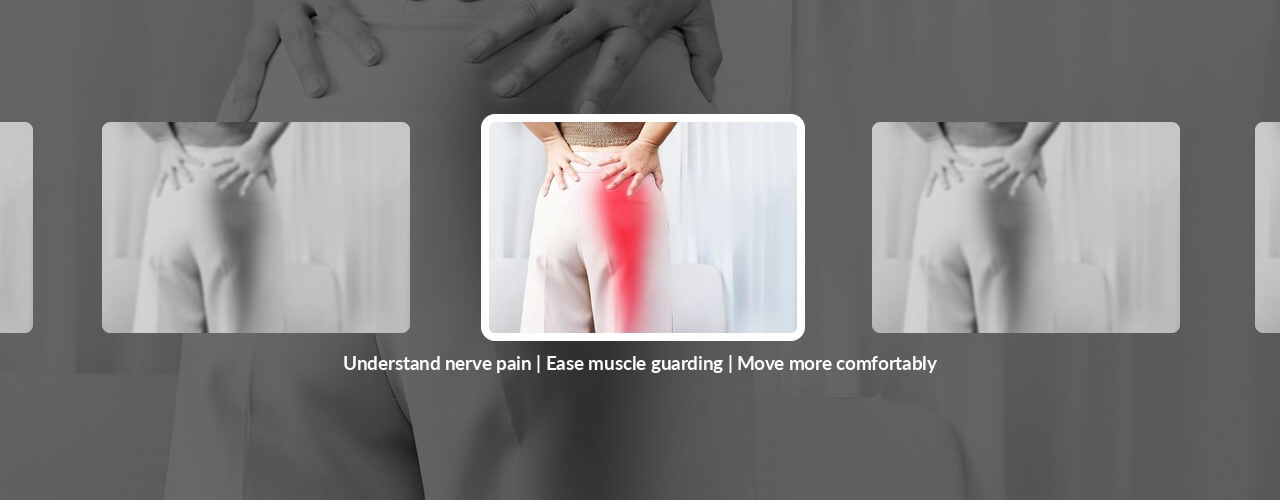
A sharp pain shoots from your lower back into your leg. Tingling makes sitting uncomfortable. Your leg even feels weak or unsteady during everyday activities. These symptoms can point to sciatica, a problem involving irritation or pressure on the sciatic nerve. For some patients, manual therapy for sciatica symptoms can be part of a physical therapy plan to reduce discomfort and help restore comfortable movement.
Why Sciatica Can Send Symptoms Down Your Leg
Sciatica isn’t a condition in and of itself. Instead, the term refers to symptoms caused by irritation or compression of the nerve roots that form the sciatic nerve, a large nerve that travels from the lower back through the buttock and into the leg.
Several conditions can irritate these nerve roots. A herniated disc may place pressure on a nerve. Age-related changes in the spine can narrow the space around a nerve. In some cases, inflammation around sensitive tissues can also contribute to symptoms.
Common signs include:
- Pain that begins in the lower back or buttock and travels down one leg
- Burning, aching, or sharp sensations
- Tingling or a pins and needles feeling
- Numbness in part of the leg or foot
- Weakness that affects walking or other activities
- Symptoms that become worse with certain positions or movements
Sciatica can look different from one person to another. That is why identifying the factors contributing to your symptoms matters before treatment begins.
When Nerve Pain Starts Changing the Way You Move
Pain often affects more than the irritated area. You may start sitting differently, taking shorter steps, or avoiding movements that seem uncomfortable. Over time, these changes may contribute to stiffness, reduced strength, and difficulty returning to normal activities.
A physical therapist can examine your movement, strength, mobility, and nerve-related symptoms. This evaluation helps determine which activities reproduce your symptoms and which movements may provide relief.
Treatment can then address the factors most relevant to you, rather than relying on the same approach for every case of sciatica.
How Manual Therapy for Sciatica Symptoms Supports Better Movement
Manual therapy includes hands-on techniques performed by a physical therapist to address joints and soft tissues. Depending on the findings from your evaluation, treatment may include gentle joint mobilization, soft tissue techniques, or other targeted hands-on approaches.
The goal is not to force the nerve back into place. Instead, manual therapy for sciatica symptoms may help improve mobility, decrease muscle guarding, and make certain movements more comfortable.
Your therapist may use manual techniques to address areas such as the lower back, hips, or surrounding muscles when these regions are contributing to movement restrictions. The exact approach depends on your symptoms and how your body responds.
Manual therapy is generally most useful as one part of a broader rehabilitation program rather than as a standalone treatment.
Pairing Hands-On Care With Active Sciatica Treatment
Lasting progress often requires active treatment as well. At Atlanta Human Performance Center, manual therapy for sciatica symptoms can be combined with exercises and movement strategies selected for your individual needs.
Your physical therapy program may include:
Mobility Exercises
- Specific movements can help restore comfortable motion in the spine or hips.
Strengthening
- Exercises for the trunk, hips, and legs can improve support during everyday activities.
Nerve Mobility Exercises
- Gentle movements may help the nervous system tolerate motion more comfortably when appropriate.
Movement Training
- Your therapist can help you find more comfortable ways to bend, lift, sit, walk, and perform other daily tasks.
Activity Guidance
- Gradually returning to meaningful activities can help rebuild confidence and physical capacity.
This combination gives you tools you can use outside the clinic. It also allows your therapist to adjust treatment as your symptoms and abilities change.
Turning Short-Term Relief Into Better Daily Function
The purpose of physical therapy is not simply to make an uncomfortable area feel better for a few hours. Treatment should help you move toward activities that matter in daily life.
For example, manual therapy for sciatica symptoms may make movement more comfortable enough to participate in therapeutic exercise. Exercise can then help build strength, mobility, and tolerance for activity.
Your therapist can also teach you how to respond if symptoms change. Learning which movements help and how to adjust activity can make sciatica feel less unpredictable.
Move Beyond Sciatica With a Plan Built Around You
Sciatica can be frustrating, but nerve pain does not have to leave you guessing about which movements are safe or what to try next. A physical therapy evaluation can help identify factors contributing to your symptoms and guide an appropriate treatment plan.
The team at Atlanta Human Performance Center can combine hands-on care, targeted exercise, movement training, and patient education to support better mobility and function. Contact Atlanta Human Performance Center today to learn how individualized physical therapy can help you manage sciatica and return to the activities that matter to you.
Tags: leg tingling, lower back mobility, movement training, nerve pain