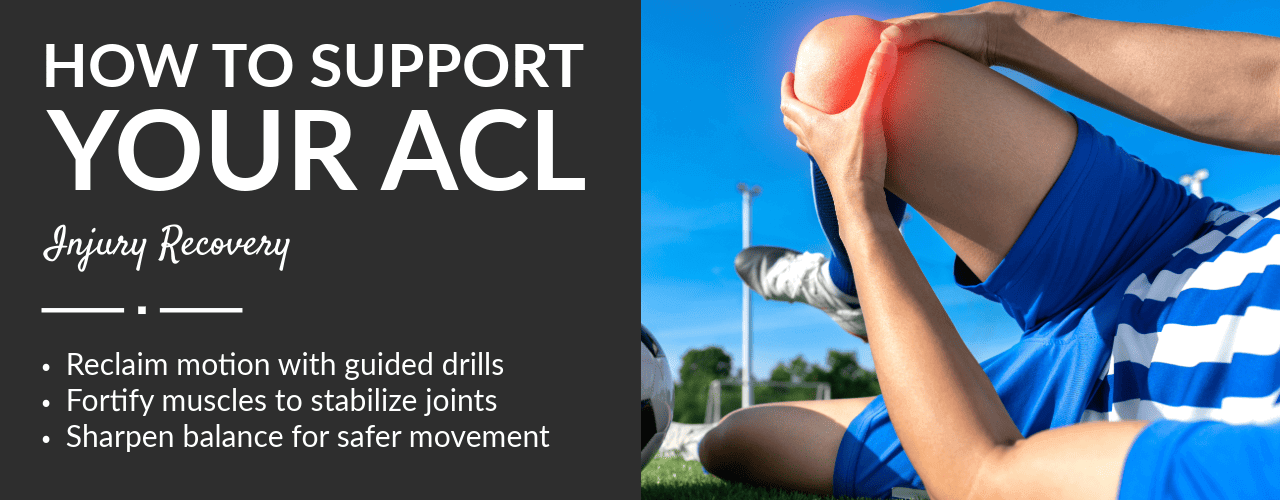
Recovering from an anterior cruciate ligament (ACL) injury takes time, patience, and the right guidance. Without a structured approach, healing can be delayed, or worse, complications may develop. That is why a step-by-step plan makes all the difference. At Atlanta Human Performance Center, we help individuals regain strength, mobility, and confidence after injury. If you are navigating your ACL injury recovery, this guide outlines what to expect and how to support your progress from the early stages to full return to activity.
Six Steps to Recovery from an ACL Injury
Step 1: Understand Your Injury and Recovery Timeline
The ACL is one of the key ligaments that stabilize the knee. It often gets injured during sports that involve pivoting, sudden stops, or awkward landings. After a tear, your joint loses stability and coordination, which can make everyday tasks feel difficult.
In the first stage of ACL injury recovery, the main goals are reducing pain, minimizing swelling, and protecting the healing tissues. This phase typically involves rest, ice, compression, and elevation, along with safe, guided movement under the supervision of a physical therapist.
Step 2: Restore Range of Motion Early
Regaining your knee’s ability to move smoothly is one of the top priorities in rehab. Stiffness is common in the first few weeks, but waiting too long to restore motion can limit long-term outcomes.
A physical therapist will guide you through gentle bending and straightening exercises. These activities may include heel slides, quad sets, and supported knee extensions. Do not force movement. Let your body respond and communicate with your therapist regularly.
Step 3: Build Strength Gradually
Muscle weakness, especially in the quadriceps and hamstrings, happens quickly after an ACL injury. To support the knee, you need strong muscles around the joint.
During ACL injury recovery, your physical therapist will create a customized plan to rebuild strength without risking reinjury. Early-stage strengthening includes isometric holds and resistance band work. As you progress, your program will include functional movements such as squats, step-ups, and lunges. Proper form and gradual resistance are key.
Step 4: Improve Balance and Neuromuscular Control
When the ACL is injured, the brain’s ability to sense joint position is affected. This loss of proprioception increases the risk of falling or damaging the knee again.
Rehabilitation focuses on restoring these connections through balance training. Single-leg stance drills, balance boards, and dynamic stability exercises challenge your muscles and nervous system together. Your therapist may also integrate core exercises to improve control during movement.
Step 5: Return to Sport or Activity with Confidence
One of the most challenging phases of ACL injury recovery is returning to sport or high-demand activities. Fear of reinjury is common, even after pain and strength improve.
To help bridge this gap, physical therapists use sport-specific drills and functional testing. These activities simulate real movement patterns and help you regain mental and physical readiness. Your therapist will monitor your progress and ensure your knee is prepared for cutting, jumping, or pivoting.
Step 6: Support Recovery with Smart Habits
Beyond rehab exercises, your daily routine can make a big impact on healing. Staying consistent with your home program, getting enough sleep, and eating nutrient-rich foods all help the body repair tissues.
Avoid overtraining or rushing back into full activity before your therapist clears you. Listen to your body and communicate about any setbacks or concerns.
Recovering from an ACL Injury Is a Team Effort
No one should have to face ACL injury recovery alone. Whether you are an athlete, weekend warrior, or simply want to return to normal life, you deserve a plan that fits your goals and lifestyle.
At Atlanta Human Performance Center, we provide expert physical therapy support tailored to your specific needs. From your first steps post-injury to your return to full strength, we are with you every step of the way. Contact us today to learn how we can help guide your ACL recovery and get you back to doing what you love.
Tags: movement retraining, sports injury rehab, ACL injury recovery, knee stability